
Executive Thesis
The Lobito Corridor is best read as a strategic logistics system, not a single railway project. Its value depends on whether the Port of Lobito, the Benguela Railway, the DRC rail interface, and the Zambia extension can operate as one bankable chain from mine gate to Atlantic export. The corridor's upside is faster, lower-risk access for copper, cobalt, and associated critical minerals; its test is whether financing, border governance, community safeguards, and commercial freight volumes keep pace with the political narrative.
This hub frames the corridor as an operating platform where infrastructure delivery, mineral diplomacy, private concession design, and ESG accountability intersect. Use it first to orient the route, then move into the pages below for project-level detail.
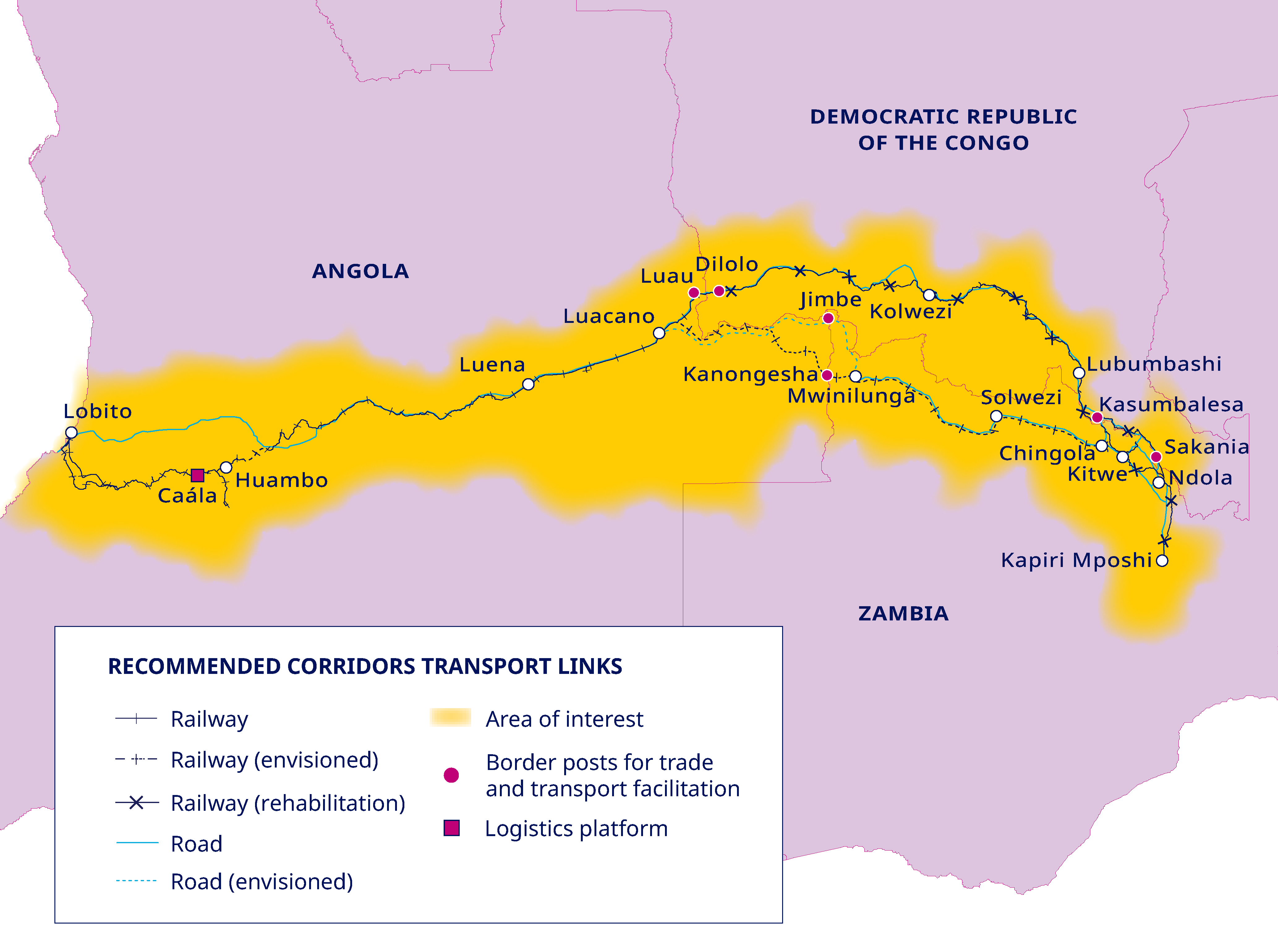
How To Read The Route
The official map is the base layer. The intelligence question is whether the port, Angolan rail spine, DRC rehabilitation zone, border systems, and Zambia extension can operate as one commercially reliable chain.
What This Section Answers
- What is the Lobito Corridor, where does it run, and which assets define the route?
- How do the Benguela Railway, Port of Lobito, DRC segment, and Zambia extension fit together?
- Which institutions govern the corridor, and which companies operate or finance it?
- What capacity, transit-time, funding, and construction milestones matter for decision-makers?
- How does Lobito compare with TAZARA, Dar es Salaam, and China's Belt and Road infrastructure model?
Priority Intelligence Map
| Question | Start Here |
|---|---|
| Base definition | What is the Lobito Corridor? |
| Route and geography | Route Map and Corridor Route Map |
| Core rail asset | Benguela Railway |
| Atlantic gateway | Port of Lobito and Mineral Terminal |
| Buildout risk | Construction Timeline, Zambia Extension, and Luacano-Jimbe Branch |
| Operating model | Governance, Stakeholders, and Funding Breakdown |
| Performance case | Capacity and Transit Times |
| Strategic alternatives | Lobito vs TAZARA, Lobito vs Dar es Salaam, and Lobito vs BRI |
Strategic Context
For geopolitical framing, read China vs US, Competing Corridors, and Supply Chain Diversification. For the capital stack, use Total Commitments, DFC Loans, and EU Investment. For evidence checks, pair this hub with Export Volumes, Investment Flows, and Construction Progress.
The editorial priority is execution quality: whether the corridor can move from summit narrative to dependable freight service, transparent financing, enforceable operating standards, and measurable development outcomes for communities along the route.
Source and Evidence Note
This hub is maintained against institutional source categories: government corridor agreements and transport plans; port and railway operator disclosures; DFI, multilateral, and export-credit financing documents; company filings and concession announcements; public trade, production, and logistics datasets; and recognized ESG and resettlement standards. The page does not rely on anonymous claims or unsourced deal chatter for factual assertions.
Update and Fact-Check Note
Last fact-check: 2026-05-19. Corridor facts are reviewed when public financing terms change, construction milestones move, route capacity is updated, government agreements are amended, or linked pages receive source-pack upgrades. Treat headline cost, capacity, and completion figures as time-sensitive and verify them against the linked project pages before reuse.